Get alerts for ballots, on-sales, resale windows and price drops
before the best tickets disappear.
Never Miss a London Ticket Drop
See Upcoming Events ↓
From the 2024–25 season the Champions League abandoned the group stage that had defined it for three decades. In its place is a league phase of thirty-six clubs in a single table. Each club plays eight matches against eight different opponents rather than home-and-away within a group of four, which means no two clubs face an identical schedule.
Qualification out of the league phase splits three ways. The top eight progress directly to the round of sixteen. The clubs ranked ninth to twenty-fourth enter a two-legged knockout play-off round, with the winners joining them. Clubs finishing twenty-fifth or below are eliminated from European competition entirely, with no drop into the Europa League.
The redesign was driven by a desire for more competitive matches between larger clubs and fewer dead rubbers. Its most significant practical effect is that the league phase is genuinely difficult to read until the final round, because clubs are separated by a single table rather than by isolated groups.
Most places are allocated to domestic leagues by UEFA coefficient ranking, with the strongest associations receiving several automatic berths for their highest league finishers. England is among those, which is why a top-four Premier League finish has become the practical benchmark for London clubs.
Beyond that, a champions path runs through qualifying rounds for title winners from smaller associations, preserving a route for domestic champions who would otherwise never reach the competition proper. The reigning Champions League holders also qualify automatically, regardless of league position.
The 2024–25 restructure added performance-based places, awarded to the associations whose clubs performed best across all European competitions in the previous season. This means a strong collective season by English clubs can deliver an additional Premier League qualification place — a mechanism that did not previously exist.
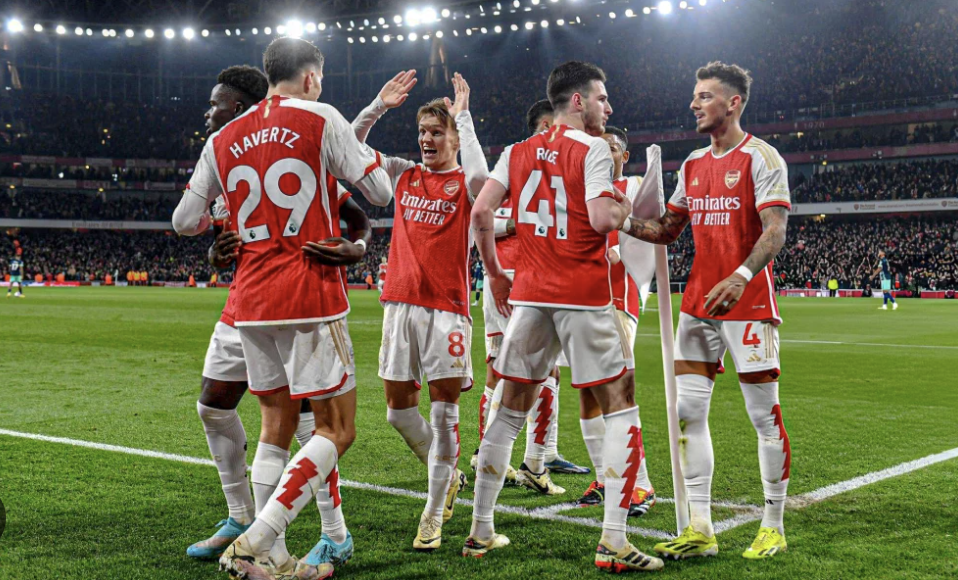
Three London clubs are regular participants when they qualify. Chelsea are the city’s most successful in the competition, having won it twice — in 2012 and again in 2021 — making them the only London club to have lifted the trophy. Arsenal reached the final in 2006, and Tottenham Hotspur in 2019, both losing narrowly.
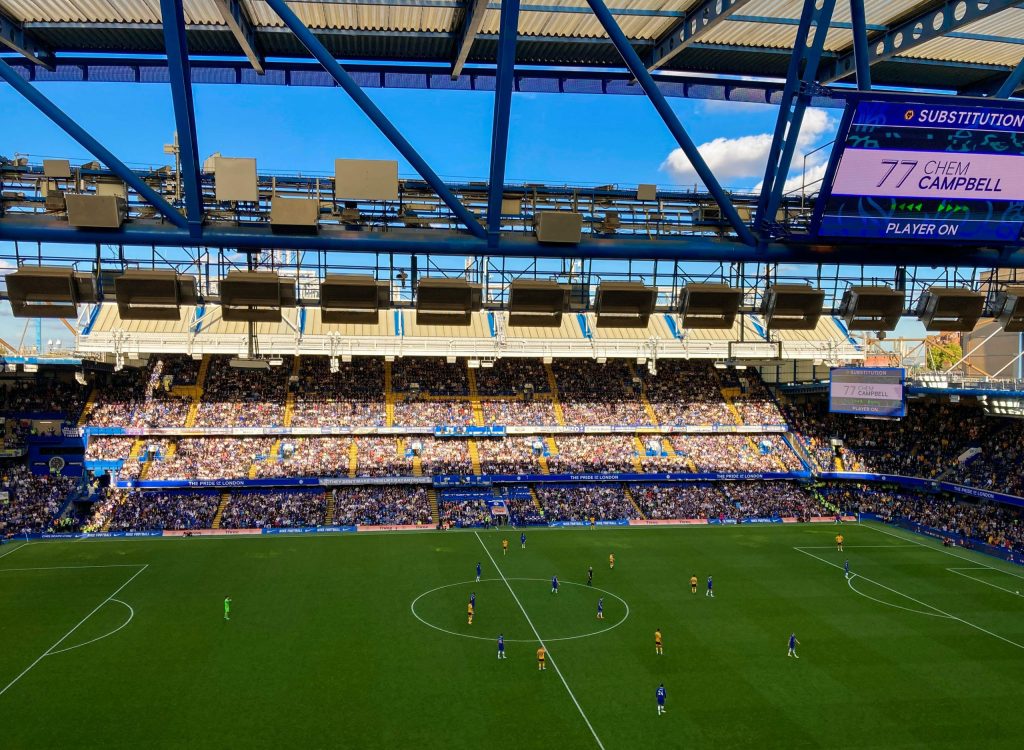
Home fixtures are played at the clubs’ own grounds, so a European night in London means Stamford Bridge, the Emirates Stadium or the Tottenham Hotspur Stadium. These are among the most atmospheric fixtures in the English calendar, and they are also among the hardest tickets to get.
The competition began in 1955 as the European Cup, a straight knockout contested only by the champions of each domestic league. That purity is what the name still evokes, and for nearly four decades a club had to win its own league to enter.
It was rebranded the Champions League in the early 1990s and progressively opened to clubs finishing below first in the stronger leagues, alongside the introduction of a group stage. That change transformed the competition commercially and is the reason a club can now win it without ever having won its own domestic title.
The 2024–25 league phase is the largest structural change since then, and it moves in the same direction: more guaranteed fixtures, more participants, and a longer competition. Whether that strengthens or dilutes it is the same argument that has followed every expansion the competition has made.
The final is played as a single match at a neutral venue selected by UEFA years in advance, rotating around the continent. Wembley Stadium is one of the competition’s most frequent hosts, and counting the original stadium alongside the current one, London has staged more European Cup and Champions League finals than almost any other city.
A final at Wembley is a very different proposition from a domestic showpiece: allocations to the two competing clubs are a relatively small share of the stadium, with a large proportion going to UEFA, national associations, sponsors and hospitality. The Wembley seating guide and transport guide cover the venue itself.
Champions League home fixtures are the most in-demand club matches in London. Clubs allocate them almost entirely to season-ticket holders and members, usually through loyalty-point systems, and general sale is rare. League-phase matches against less familiar opposition are the most attainable; knockout ties are effectively members-only.
That scarcity makes the competition a particular target for ticketing fraud, so read how to buy resale tickets safely before using any secondary platform. If you are watching rather than attending, where to watch football in London covers the city’s options for European nights.