Last updated: July 21, 2026
Get alerts for ballots, on-sales, resale windows and price drops
before the best tickets disappear.
Free London ticket alerts
Never Miss a London Ticket Drop
See Upcoming Events ↓
Super League Grand Final guide →
The Super League returned to a fourteen-club competition for the 2026 season, expanded from twelve. Clubs play a regular season through the spring and summer, with the leading sides entering play-offs in September and the campaign concluding with the Grand Final at Old Trafford in early October.
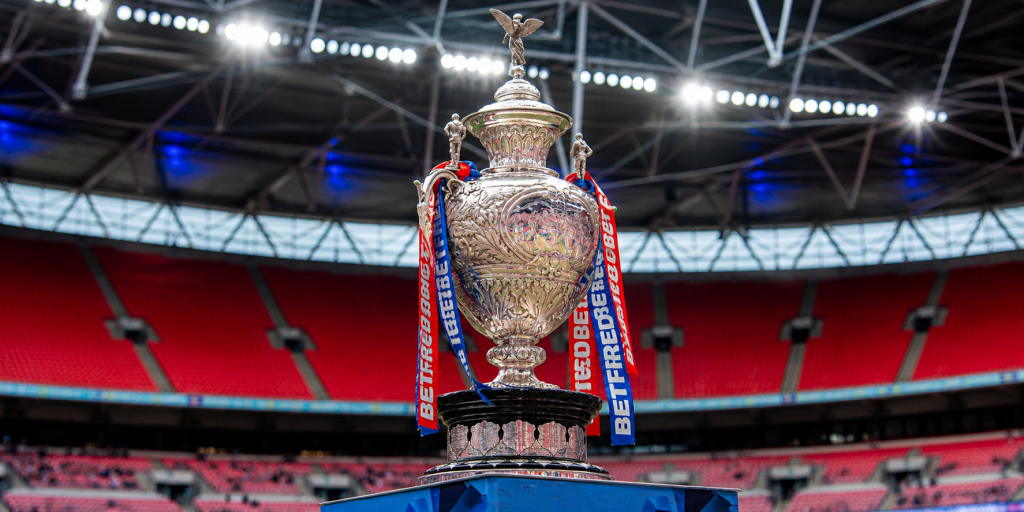
The Grand Final is the defining fixture of the rugby league year. Unlike a league title decided on the table, the champion is the club that wins that single match, which means a side can finish top of the regular season and still end the year without the trophy.
The competition sits within a wider rugby league structure, with promotion and relegation connecting it to the divisions below, and a separate knockout cup competition running alongside the league season.
The two codes split in the nineteenth century and have diverged substantially. Rugby league is played thirteen a side rather than fifteen, and there are no contested scrums or lineouts in any meaningful sense, which removes the set-piece contest that shapes so much of union.
The central difference is the tackle count. A side in possession has six tackles to make ground before handing over possession, which produces a completely different rhythm: structured sets of six, a kick on the last tackle, and a constant emphasis on gaining metres rather than on contesting possession.
The result is a faster, more continuous and more physically repetitive sport. There are fewer stoppages, collisions are frequent and heavy, and the athletic demands are relentless in a way union’s stop-start structure does not replicate. It is genuinely a different game rather than a variation.
That geography is a historical artefact rather than an accident of popularity. The split from union in 1895 was driven by a dispute over compensating working-class players for time off work, and the clubs that broke away were concentrated in the industrial north — which is precisely where the code remains rooted today.
Rugby league’s heartland is the north of England, and that concentration is the sport’s defining structural feature. The overwhelming majority of Super League clubs are based in Yorkshire, Lancashire and Cumbria, reflecting where the code took hold after the split.
London’s relationship with the top flight has been intermittent rather than continuous. The capital has been represented in Super League at various points, but establishing a sustained presence has proved difficult, and the club’s participation has depended on promotion rather than being a fixture of the division.
Beneath the professional level, the sport does have a genuine London footprint. Amateur and community clubs operate across the city, and the student and armed forces games have long provided a route into the code for players who grew up outside the northern heartland.
Rugby league is among the most physically punishing team sports played professionally. The six-tackle structure means players are involved in collisions almost continuously, with none of the natural recovery that scrums, lineouts and rucks provide in union.
That has consequences for how squads are built and managed. Attrition through a season is severe, squad rotation is constant, and the sport has been at the forefront of research into collision loads and player welfare. Watching live, the sheer repetition of contact is the thing that most surprises people coming from union.
Old Trafford has hosted the Grand Final for most of the competition’s history, and it is staged as a full evening occasion with music, fireworks and a fanzone built around the match. It regularly draws the largest crowd of the rugby league season by a considerable margin.
For a London-based supporter it is a straightforward trip: Manchester is roughly two hours by rail from Euston, and the fixture is scheduled in the evening, which makes it feasible as a long day or a comfortable overnight. The Super League Grand Final guide covers travel and tickets, and sports trips from London sets out the wider picture for fixtures outside the capital.
Clubs also run substantial season-ticket offers relative to the cost of individual matches, which is unusual value given the number of home fixtures across a February-to-September campaign.
Super League is among the most affordable professional sport in Britain. Regular-season tickets are inexpensive, family pricing is standard across clubs, and grounds are rarely at capacity outside derbies and play-off fixtures, which makes walk-up attendance realistic.
The Grand Final is the exception in scale but not in price. Tickets start at a level well below equivalent football occasions, with reduced pricing for under-16s, and the fixture is deliberately kept accessible as the sport’s showpiece.
Last updated: July 21, 2026